Matt Mason, author of The Pirate’s Dilemma: How Youth Culture Is Reinventing Capitalism (Amazon) and Jesse Alexander, producer of Heroes and Lost, are producing a new TV show called Pirates Dilemma. The following is a teaser showing how the show might look:
“A plane is standing on a runway that can move (some sort of band conveyor). The plane moves in one direction, while the conveyor moves in the opposite direction. This conveyor has a control system that tracks the plane speed and tunes the speed of the conveyor to be exactly the same (but in the opposite direction). Can the plane take off?”
Personally, my first thought was that the plane would not take off because it wouldn’t have enough lift without moving up to speed relative to the ground. But after thinking about what it is that actually causes a plane to lift off, the wind going around the wings, I wasn’t so sure.
The wheels in planes aren’t generally what cause the plane to move forward, it’s the suction of wind through the propeller or engines. Presumably the plane would pull the same amount of wind whether or not it was riding the conveyor belt, therefore, I think it would take off.
While you’re taking a moment to think about this problem, let me tell you that tonight the Mythbuster’s are putting this question to rest once and for all. Will a plane on a conveyor belt take-off? (We’ll see tonight, but I think yes).
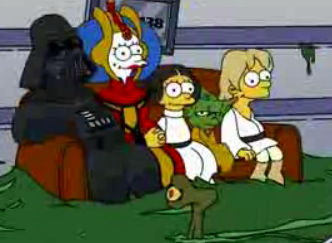
Clever illustration and animation guy Rich Cando created this Simpsons/Star Wars mash-up that I think you’ll enjoy. Accept for maybe a touch of tweaking in the animation itself, I don’t think Groening and crew could have done it much better themselves.
After six very spread out seasons, The Sopranos series comes to a close tonight. Here’s a sheet and some suggested rules to set up a household pool about who’s going to die, how, and other predictions.
I’ve been interested in learning more about Game Theory (wikipedia) lately and in particular The Prisoner’s Dilemma. One very interesting example happened on the Jeopardy show last Friday (March 16th 2007)—for the first time in 23 years, Jeopardy had a three way tie.
The tie was an anomaly in large part because one player didn’t play the game to win. Going into Final Jeopardy!, here’s how the totals stood…
Scott: $13,400
James: $8,000
Anders: $8,000
So if you were playing the game, how much would you have bet? If you’re James or Anders, you can’t win by betting nothing and hoping for Scott to wager more than $5,400 and then get the question wrong because he won’t risk that much. In order for either James or Anders to win, you would have to bet everything, get the answer right and have Scott answer incorrectly.
If you’re Scott you have to wager at least $2,601 to win. It’s unlikely that you would get the question wrong and the other two get it right, so even with a really difficult question, chances are you’d still be left with between $10,799 or $8,001 depending on how aggressive you were—either way enough to beat either of your opponents who didn’t bet anything.
Scott probably assumed that one or both of his opponents would wind up with $16,000. What Scott did next is kind of like The Prisoner’s Dilemma (wikipedia) except that Scott was safe from either James or Anders “defecting”.
Scott decided to wager exactly $2,600 creating a three-way tie. He didn’t really lose anything because now he will return on Monday with the same two opponents that he’s already beaten and by not taking the extra $1 (or extra $2399 the most additional money he could have won with a “safe” wager) he allowed both James and Anders to also collect $1600 in winnings.
Oh, you want to know about the Final Jeopardy! wager? It was an intentional bet. I counted on Anders and Jamey betting rationally and wagering everything. I thought it would be really cool to be a part of Jeopardy history. I knew that meant I’d be playing seasoned opponents, but it didn’t matter to me. I had already won a couple of games myself, and I thought it would be neat to share the money. (See my post about Jennifer from a couple of days; that’s what the literary people call foreshadowing. :-)). Now there’ll be a notation next to one of my games in the J! Archive. How cool is that?
“When you walk through the garden, you gotta watch your back.”
I’ve been watching HBO’s The Wire religiously and I’m compelled to say, it’s got to be hands down the best show on the air. Check out the Wikipedia article on the show for the rundown. I also recommend Salan’s article Breaking down The Wire.
This show is fantastic. If you haven’t seen it, find Season 1 and just start watching. No sense jumping in in the middle. I accidentally found myself watching an episode out of season 2 when I had only seen a couple of the episodes from season 1 and I was totally confused.
It’s a double-edged sword, but the design of the show is very dependent on the story arch continuing from episode to episode which means you can’t jump in the middle. However, it makes every episode twice as great because instead of rehashing plot points to make sure everybody is caught up, the time is spent on character development and moving the story forward.
I’m just finishing up season four, but I recommend you check out this show. Start with season 1 episode 1; you won’t regret it.
A couple of months ago I wrote about a cancelled TV show from the 90’s called Heat Vision and Jack. For those of you that missed it before, follow the link for the torrent.
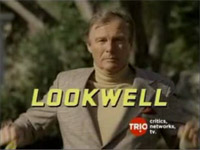
Another clever show that never made it that I’d like to tell you about is Lookwell. It’s written and produced by the brilliant Conan O’brien and Robert Smigel, and stars Adam West. Lookwell is about a washed-up detective show TV star that tries to use his fake crime fighting skills to solve real crimes. It’s nice to see a situational comedy with great lines and likeable characters as opposed to the crap on TV these days.
As you are expecting, here is the YouTube link for Lookwell.
Make Me Watch TV, is a site where you get to force me, (well actually not me, actually Aric McKeown), watch whatever TV show you please.
Internet viewers vote on what shows Aric should watch and then he blogs about it. More fun than actually watching the crappy shows he has to endure—he’s actually quite entertaining.