CBC, Copyright and Fair Dealing

When I happened upon the CBC’s “Reuse and Permissions” page, I clicked the link because I was curious how the nation’s publicly funded broadcasting company would feel if I tried to reuse the content that I helped pay for.

From the FAQ:

Q. I am a university student and have come across a video clip on your website that I am hoping to use in a presentation. Is it possible for me to use it?

A. Unfortunately, we can’t give permission for this type of use without charging a sizeable licensing fee. However, you are welcome to create a link to the cbc.ca page in your presentation, so your fellow students may view the CBC content.

They can’t give permission without a sizable licensing fee?! It seems they’re not actually interested in licensing their content either or perhaps they’d have some information regarding just how “sizable” a fee they mean. For some students, using a “link” to the CBC’s website is not possible if the presentation is going to be done at a school where the Internet is not available. Now, having said that, using the web browser to view their content IS making a copy! That’s how the Internet works, everything is a copy! So they’re giving permission to make a copy while at the same time trying to imply a restriction on ones right to change the format in which the copy exists (ie. only playing the content from their website).

Now for an organisation so reliant on tax payers’ funding, the CBC’s policy is in itself ridiculous, but if we take it a step further and consider what the Canadian Copyright Act states about students copying work for educational purposes, we find some rather revealing details (though I’m not a lawyer, this seems pretty simple to me).

In the 2004 landmark ruling by the Supreme Court of Canada in CCH Canadian Ltd. v. Law Society of Upper Canada the concept of fair dealing in Canada was clarified, in part, when the Court made the following general observation:

[I]t is important to clarify some general considerations about exceptions to copyright infringement. Procedurally, a defendant is required to prove that his or her dealing with a work has been fair; however, the fair dealing exception is perhaps more properly understood as an integral part of the Copyright Act than simply a defence. Any act falling within the fair dealing exception will not be an infringement of copyright. The fair dealing exception, like other exceptions in the Copyright Act, is a user’s right. In order to maintain the proper balance between the rights of a copyright owner and users’ interests, it must not be interpreted restrictively.

This brings up the question of what exactly is Fair Dealing? Well, again from the landmark Supreme Court of Canada case that establishes the bounds of fair dealing in Canadian copyright law CCH Canadian Ltd. v. Law Society of Upper Canada:

It is impossible to define what is “fair dealing”. It must be a question of degree. You must consider first the number and extent of the quotations and extracts. Are they altogether too many and too long to be fair? Then you must consider the use made of them. If they are used as a basis for comment, criticism or review, that may be a fair dealing. If they are used to convey the same information as the author, for a rival purpose, that may be unfair. Next, you must consider the proportions. To take long extracts and attach short comments may be unfair. But, short extracts and long comments may be fair. Other considerations may come to mind also. But, after all is said and done, it must be a matter of impression. As with fair comment in the law of libel, so with fair dealing in the law of copyright.

In Canada, the six Fair Dealing exceptions are:

  1. The Purpose of the Dealing
  2. The Character of the Dealing
  3. The Amount of the Dealing
  4. Alternatives to the Dealing
  5. The Nature of the Work
  6. Effect of the Dealing on the Work

Though not all of these considerations will arise in every question of Fair Dealing, this list provides a useful analytical framework with which govern decisions of fairness.

Specifically, section 29.6 of the Canadian Copyright Act says:

“it is not an infringement of copyright for an educational institution or a person acting under its authority to

(a) make, at the time of its communication to the public by telecommunication, a single copy of a news program or a news commentary program, excluding documentaries, for the purposes of performing the copy for the students of the educational institution for educational or training purposes;

So, if you’re a student wanting to show a video clip of a news program or news commentary program, you don’t need the CBC’s permission to make a copy and you’re allowed to keep and show that copy for up to one year without paying royalties.

I think it’s disgraceful that CBC is so protective over their publicly funded content, however, the law does allow for the presentation of certain material for educational purposes in educational contexts. It’s too bad the CBC doesn’t realize this.
Aesthetic and Efferent Listening – A Handout

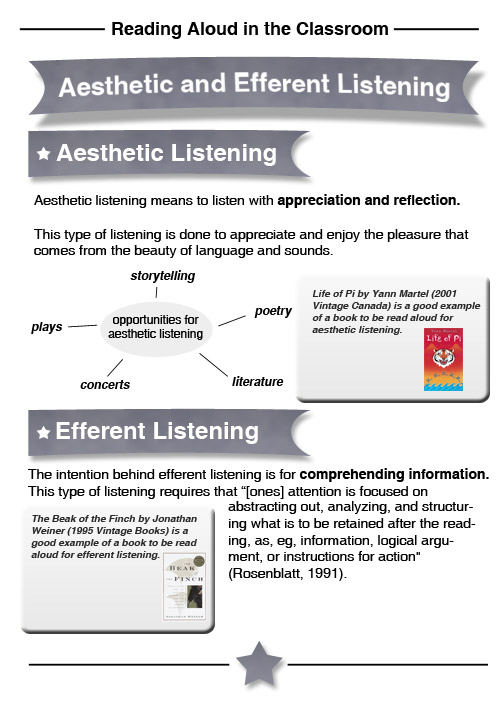
Here is a handout I created for my language in education class. I figure I might as well post it, in case someone out there might find it useful.

aesthetic and efferent listening handout

I’m going to leave this up, but I’ve always felt a bit guilty that I didn’t do a better job with this assignment. If you’re searching for something to explain the differences between aesthetic and efferent listening skills, there have to be better resources out there than this one.

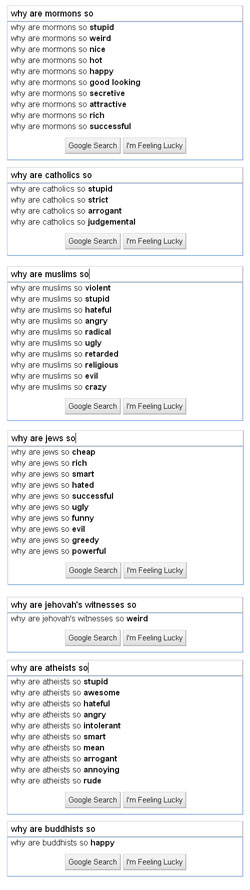
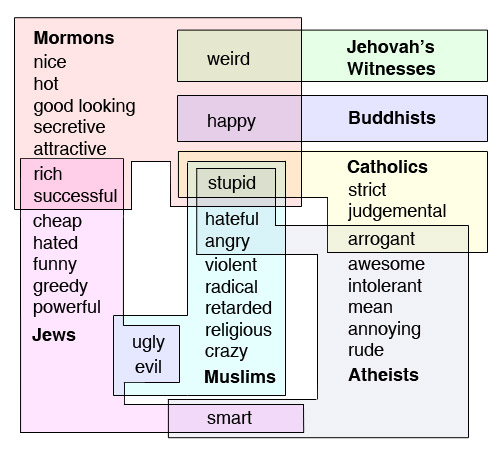
Why Are They So…

What people search for says a lot about the collective perspectives on things.


It’s worth noting that these results came from google.ca and are created via what people are searching for, not necessarily what any one group is actually like.

(Inspired via)

Jeff Milner Autobiography

A very short summary of my life:

Jeff Milner’s 2 minute autobiography.

(Made for one of my education classes).

Autobiographical writing and representation
By Jeff Milner
Due September 29, 2010
Images: http://www.flickr.com/photos/jeffmilner/sets/72157624935640311/show/
(to be played simultaneously with the audio)

Transcript of the audio:

I began my school life in the autumn of my sixth year. Over the next 12 years as I finished elementary, jr. and sr. high I felt that I would never complete school. I spent winter evenings playing basketball at the gym and my summers in the pool. I developed a passion for travel. My family would often take road trips to the United States. At age 15 I took part in an international art camp in Japan.

I learned the value (and grind) of manual labor working on a huge vegetable farm packing corn and carrots. In the eleventh grade I decided not to rejoin the basketball team and instead took a job with a local computer shop fixing PCs and eliminating lemons by checking new computers before they left the store. It wasn’t glamorous work, but it sure beat packing corn.

At 19, I moved to Salt Lake City volunteering a year of service to my church. This remains one of the most memorable years of my life.

After returning, I got a job working for the City of Medicine Hat in their GIS department. Using an air photo covering the city limit I traced the outline of every building within the municipal boundary. It was during this time that I began to kayak.

The job only lasted for about a year and then I began work as a pre-press assistant at the Medicine Hat News. Working nights didn’t suit me, so I found a new job working for a local engineering company that did defense research at the nearby army base. My job was to bury electronic landmines for research purposes.

Moving from job to job and living at home, while building an interesting set of skills and experiences, did not give me the same satisfaction as the more stable and independent life I would find when I moved to Lethbridge to start university in 2002. I found a great source of friendship on the university swim team.

I completed a degree in New Media 4 years later with a work experience placement in Malaysia helping create channel identity clips for Southeast Asia’s music channel, Channel V. Although it was a wonderful opportunity I didn’t take full advantage of my time there because I was distracted with heartache due to the break-up with my university sweet-heart.

After convocation I went into web design and photography full tilt. My skills in kayaking improved and I also took a couple of teaching jobs in the summer at the University. I alternated between teaching the Movie Making, animation, and swim camps. I found a love for teaching there that in part inspired me to return to school and get a second degree in formal education. Sometimes I still feel like I will never finish school but now I look at the journey itself as my destination and it doesn’t bother me that I’m still not done. I’ll always keep growing.

Reflection on the process of creation:
I wanted to fit in as much as possible in just two minutes. This restraint left me with the arduous chore of deciding what to include and what to cut. I’m not sure I made the best choices as many very interesting things about myself didn’t make it. (I do have about 10 years more than most of the students, so perhaps if I had an extra minute I could have fit it all in there).

Some of the images fit perfectly with the story, while at times other images that I wish I had, just don’t exist.

The music that goes with the story ads a level of interest that I personally really like. Creating a podcast is something that I’ve been interested in for a long time and I’m glad this assignment pushed me into creating one.

J’taime comme un fou – lipdub

During my “Music of Quebec” workshop at the University of Quebec at Trois-Rivieres in the Explore program, together with almost 100 students, we created this “lipdub” music video. Students from the Summer 2010 session of the workshop participated in the video singing along to the song “J’taime comme un fou” [I love you like a fool] by Robert Charlebois.

New Personal Best

I swam a new personal best time for 1000m this afternoon. I did the whole thing in just 16:00. I never swam this fast (for long distances) even when I was with the Pronghorns. I can hardly wait for the alumni meet.

I wish I could say as much for my improvement in French. I’m learning, but it’s been tough.

Flickr’s New Layout

When I heard about Flickr’s new layout changes, I was excited to see what improvements they were making. (For scale, the images below are 500px wide — that is the actual width of the photo in the old view.)

The old view:
A view of Flickr's old layout

The new view:
A view of Flickr's new layout

Things I dislike about the new Flickr preview.

  • They removed the helpful url links when viewing “all sizes”.
  • They no longer have a “browse” link to take you to the flickr stream page where that photo appears Looks like they fixed this, the photostream link now takes you to a specific page.
  • The map on the side is way to prominent. Seriously, is the map more important than the other photos?
  • They removed speed options, viewing of descriptions, and ability to see what’s coming up in their new lightbox mode (instead of slideshow – I don’t love flash, but I liked the slideshow feature.).
  • They turned the quick links above a photo into pull down menus. One more click to get what you want is never preferable.
  • The spacing between photos on the photostream view is too wide. Just because some people have large monitors, doesn’t mean that the photos should look unbalanced to fill up the space.
  • Titles need to go above photos, not below them.
  • “Click here to add a title” no longer disappears, but sits there cluttering untitled images. (At least for my own photos when I’m logged in.)
  • The column width for comments is now wider making comments harder to read.
  • The commenter’s icon is smaller and doesn’t look as nice. Ironic considering they could have used the icon to fill up the space so that the text column wouldn’t need to be quite as wide.

Things I like:

  • I like the new 640px default size, though things load a bit slower.

I admit, when viewing the small images above, I like the look of the new version because the bigger photo is nicer. However, all the other concerns make me feel like this one positive is not worth all the other negatives.

In my opinion, Flickr should hire the type of people that started the company: people passionate about photography and user interfaces.

My “pro” account is expiring next week. I am thinking about migrating my photos to Picasa before then. That doesn’t leave me much time.