The Large Hadron Collider

The latest iteration of the world’s biggest physics experiment, the Large Hadron Collider, will be switched on in May 2008 (though the BBC documentary below says November, the time line has been updated).

It’s big, REALLY big, and expensive—costing over 6 billion dollars and crossing between the borders of France and Switzerland at four points. The LHC is being funded and built in collaboration with over two thousand physicists from thirty-four countries, universities and laboratories.

As a side note, CERN has had some impressive byproducts, including the web itself.

The BBC created a great documentary about it called The Six Billion Dollar Experiment, the full running time is 49 minutes, but you can enjoy the BBC’s preview:


[The Six Billion Dollar Experiment – YouTube]

The Amazing Intelligent Resize

Currently if you have a large image that you need to make smaller for the web you can either scale it or crop it. Scaling makes everything smaller and cropping can cut out important content. This incredible video demonstrates an image re-sizing algorithm that is content-aware. It’s pretty cool and I figure it’s something that is going to make someone a boatload of money.


[Content Aware Image Sizing – YouTube]

A Night at the Opera

This YouTube clip is of a scene from “A Night at the Opera” with The Marx Brothers. To simulate a foreign language, lines of dialogue that were meant to sound foreign were reversed when the film was originally made. That is, the foreign language is just English played backwards.

It’s not too spectacular, in fact it’s just an honest translation of what the other characters asked him to say but here is the audio I reversed: A Night at the Opera Reversed.

Platform

Platform

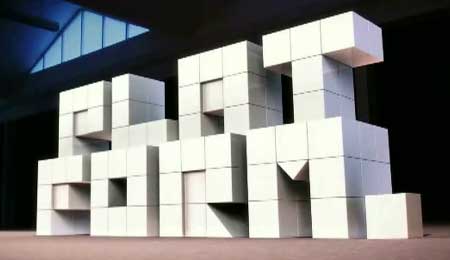
Just for fun, the motion graphics fans out there might enjoy the stop action magic of Platform from motiongrapher.com.

“Smith & Foulkes used a Canon Digital SLR camera linked up to a laptop allowing them to capture frames and play them back checking the shots as they went along. By shooting digitally Smith & Foulkes ended up with a much larger image size to work with when compared with the normal 35mm motion picture frame. These frames were then taken into After Effects and Photoshop for a clean-up where people and rigs from shots were removed. A final grade was then added in Flame.”